Behind the Plate: How Restaurants Tell Their Story Before the First Bite
At Entire, we don’t just photograph food — we document experience.
Long before a dish arrives at the table, before the fork meets the plate or the glass is raised, a restaurant has already begun telling its story. It speaks quietly at first — through light and sound, through pacing and gesture, through the subtle choreography of hospitality that most guests never consciously notice, but always feel.
These behind-the-scenes moments are where the soul of a restaurant lives.
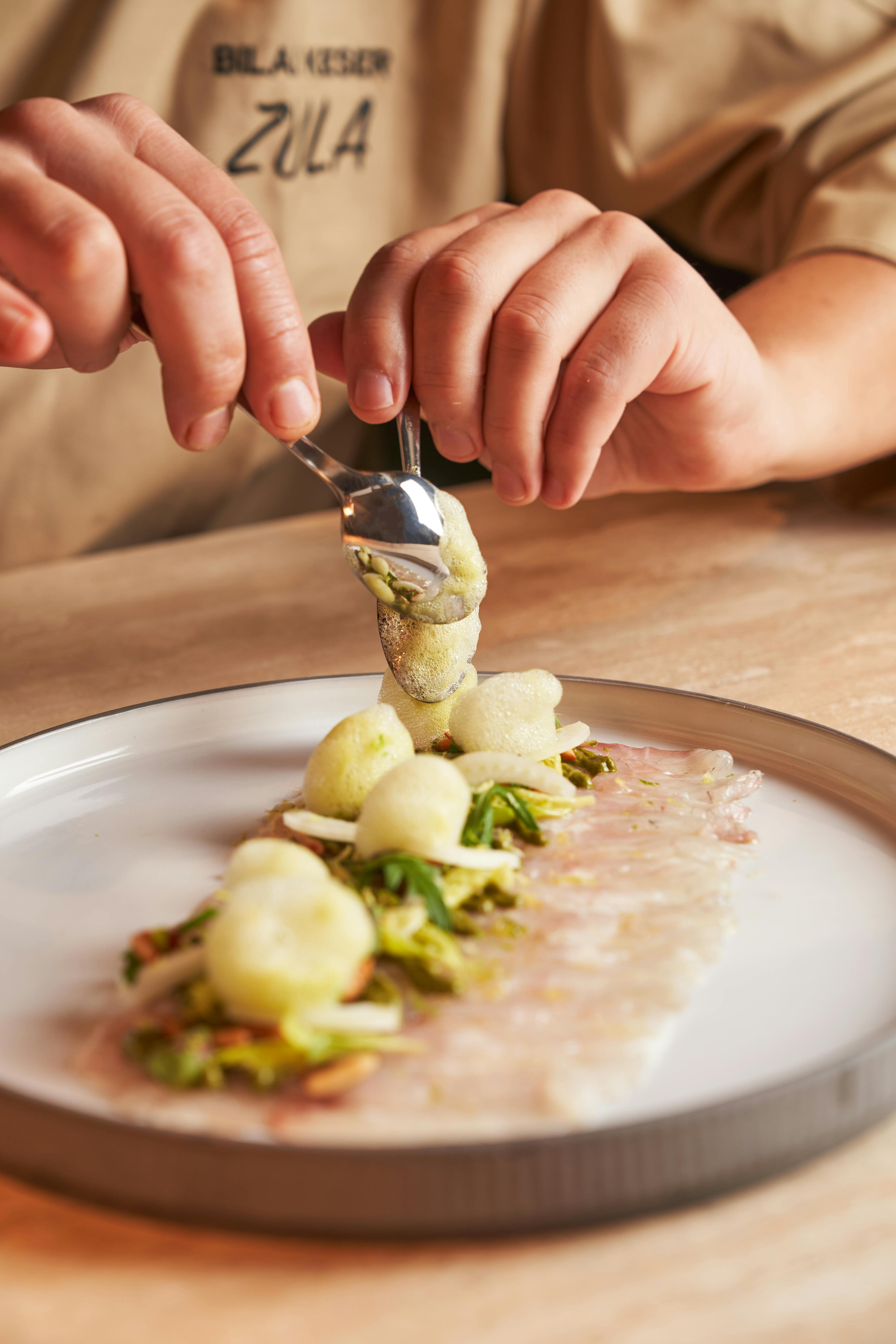
In the kitchen, there is rhythm. Not chaos, as television might suggest, but a practiced tempo — hands moving with purpose, voices low and efficient, ingredients treated with familiarity and respect. A cook wipes a plate’s edge before it leaves the pass. A chef pauses, just briefly, to taste. These moments are small, almost invisible, yet they define the experience far more than the garnish or the plating trend of the season.
Hospitality, at its best, is intentional storytelling.
A restaurant’s narrative begins at the threshold — the weight of the door, the warmth of the greeting, the way the room reveals itself slowly rather than all at once. Lighting is rarely accidental. Neither is the choice of music, nor the distance between tables, nor the way a server approaches without interrupting conversation. These decisions are not decorative; they are emotional cues. They tell the guest how to feel before they ever decide what to order.
Behind the scenes, everything is considered.
A candle is relit. A chair is adjusted. A napkin is folded just so. These gestures rarely earn praise, yet they shape memory. Guests may not remember the exact flavor notes of a dish months later, but they will remember how the room made them feel — whether time seemed to slow, whether conversation flowed easily, whether they felt seen without being watched.
This is the invisible craft of hospitality.
In recent years, food culture has become increasingly visual — plates designed for cameras, moments staged for social media. And while beauty has always been part of dining, the most compelling restaurants understand that aesthetic alone is not enough. The spaces that endure are the ones that balance beauty with meaning, precision with warmth, execution with humanity.
At Entire, we’re drawn to restaurants that understand this balance.
We look beyond the plate to the hands that prepared it. Beyond the dining room to the moments just before service begins — the quiet alignment of staff, the shared breath before the doors open. There is a vulnerability in these moments, a sense of anticipation that mirrors the guest’s own unspoken hope: that this meal will be worth their time, their attention, their presence.
Food does not exist in isolation. It is shaped by the room it’s served in, the people who serve it, and the story that surrounds it.
Consider the way a dish arrives. Is it presented with confidence or apology? Is there a story attached, or is silence intentional? Even restraint communicates something. The most experienced hospitality professionals understand that explanation is optional — clarity is not. When the experience is thoughtfully designed, it explains itself.
Behind the scenes, hospitality is less about performance and more about care.

It’s the server who notices a hesitation and adjusts pace. The bartender who remembers a preference without announcing it. The chef who insists on consistency not for recognition, but because someone trusted them with their evening. These acts rarely appear in reviews, yet they are what separate a good restaurant from a meaningful one.
Restaurants that endure are rarely chasing trends. They are refining feeling.
They understand that guests arrive carrying their own lives with them — their stress, their celebrations, their quiet need for connection. A truly great restaurant doesn’t demand attention; it creates space. Space to settle, to linger, to be present. That is not an accident. That is design.
When we document restaurants at Entire, we approach them as living narratives rather than static destinations. We pay attention to transitions — from kitchen to dining room, from day to night, from preparation to service. We observe how a space changes once guests arrive, how energy shifts, how light softens, how sound deepens. These transitions are where the story becomes real.
Because hospitality is not just about what is served.
It’s about what is held.
The anticipation before the first bite.
The pause between courses.
The quiet satisfaction at the end of a meal when nothing felt rushed and nothing felt forced.
These moments cannot be plated, but they can be felt — and they are always happening behind the scenes.
This is where restaurants tell their truest stories.
And this is where we choose to listen.
written by Editor-In-Chief,
Lori Brown
Have a story worth telling?
If your restaurant or hospitality concept is built with care, craft, and feeling, we’d love to discover it.