The New Luxury Is Peace: Why Time, Privacy, Well-Being, and the Freedom to Slow Down Are Redefining What It Means to Live Well
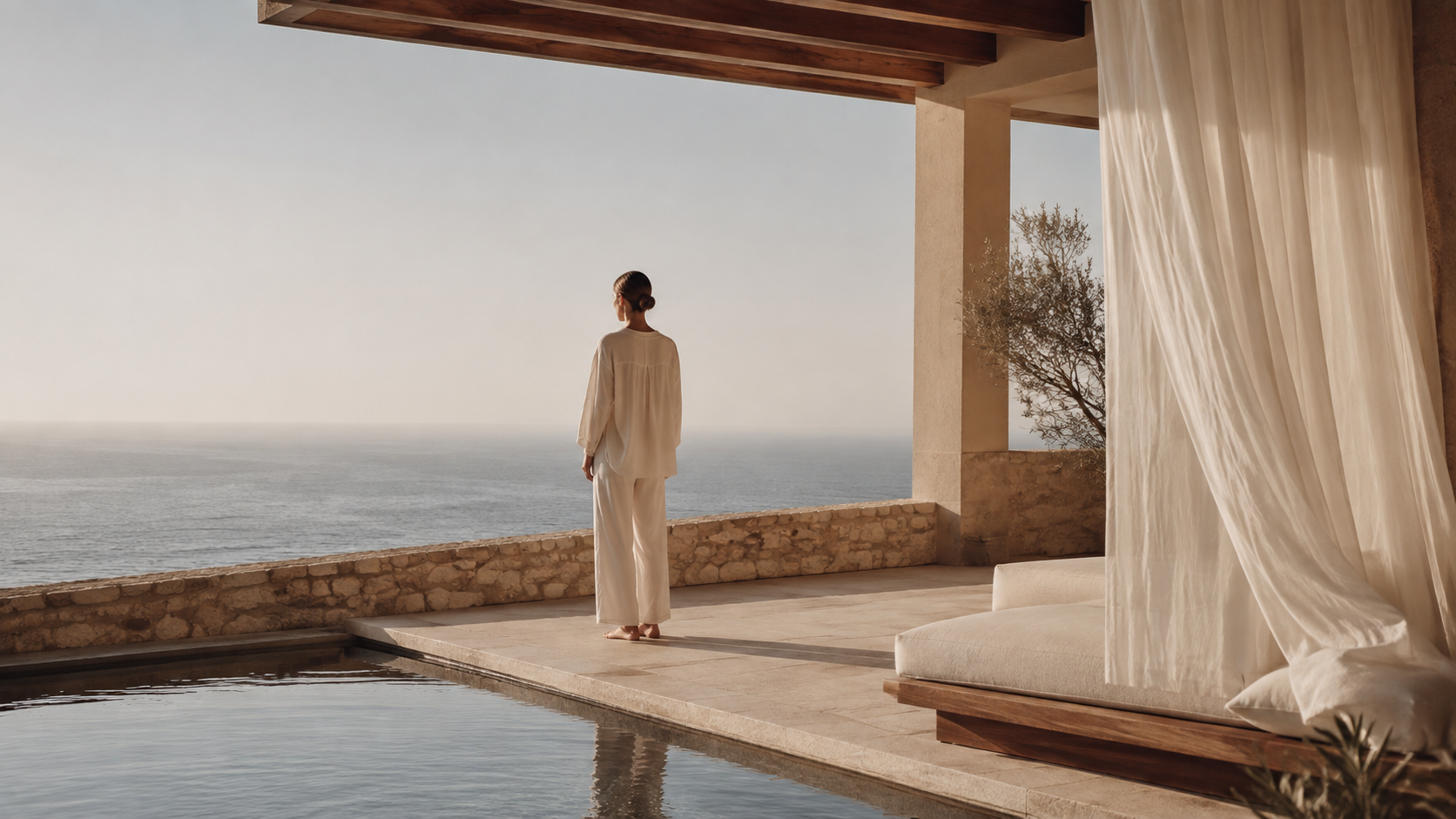
There was a time when luxury was designed to be seen.
The right address. The recognizable handbag. The sprawling home. The reservation no one could get. The passport stamped with faraway destinations.
Luxury was often measured by access, acquisition, and abundance.
But something is changing.
In an increasingly connected world—one filled with notifications, endless information, crowded calendars, and the subtle pressure to always be doing more—the things we desire most are becoming remarkably simple.
Time.
Privacy.
Space.
Health.
Rest.
The freedom to decide how we spend our days.
Perhaps the greatest luxury today isn't having more.
It's having enough space in your life to actually enjoy what you already have.
Welcome to the age of quiet luxury—not simply as an aesthetic, but as a way of living.
What Does Modern Luxury Really Mean?
The definition of luxury has never been static.
For generations, luxury was closely associated with rarity and exclusivity. The harder something was to obtain, the more desirable it became.
That principle still exists. But what feels scarce today has changed.
Our wardrobes may be full, yet our calendars are fuller.
We can communicate with almost anyone, anywhere, yet uninterrupted solitude can feel nearly impossible to find.
We have unprecedented access to entertainment, information, products, destinations, and experiences, but our attention is constantly being divided between them.
In that environment, scarcity begins to look different.
An afternoon with nowhere to be becomes valuable.
A home surrounded by nature feels extraordinary.
A meal enjoyed without looking at a phone feels indulgent.
A week spent sleeping deeply, moving slowly, and reconnecting with yourself can feel more luxurious than almost anything money can display.
The new luxury is not necessarily about possessing less.
It's about needing less from the outside world to feel fulfilled.
Time Has Become the Ultimate Status Symbol
We often talk about wealth in terms of money.
But perhaps the most meaningful form of wealth is ownership of our time.
The ability to wake without rushing. To linger over breakfast. To travel slowly rather than race through an itinerary. To spend an afternoon with family without checking the clock.
These moments are increasingly precious because modern life rarely creates them for us.
We have to protect them.
This may explain why some of today's most desirable experiences aren't necessarily the loudest or most extravagant. They're the ones that give something back: space to think, permission to disconnect, and enough time to notice where you are.
A beautiful life isn't necessarily one filled with more experiences.
Sometimes, it's one that gives us enough time to actually experience them.
Why Privacy Feels More Luxurious Than Ever
We live in an era of unprecedented visibility.
Our travels, homes, meals, careers, celebrations, and even our quietest moments can become content within seconds.
Yet as more of life becomes public, privacy has gained a new kind of value.
There is something deeply luxurious about experiences that don't need an audience.
A hidden villa reached by a winding road.
A quiet table in the corner of a restaurant.
A home designed as a refuge from the outside world.
A vacation experienced without the obligation to document every moment.
Privacy creates room for presence.
And perhaps that's why discretion has long been one of the most sophisticated forms of luxury.
Not everything beautiful needs to be seen by everyone.
Some things become more meaningful precisely because they're ours alone.
The Home as a Sanctuary
Nowhere is this cultural shift more visible than at home.
For years, luxury interiors often emphasized spectacle: dramatic foyers, pristine formal rooms, statement pieces, and spaces designed to impress.
Today, the question is becoming more personal.
How does this home make me feel?
We're seeing a greater appreciation for natural light, warm materials, comfortable furniture, acoustic privacy, connection to nature, and rooms designed around everyday rituals.
A bedroom that encourages deep rest.
A kitchen where people naturally gather.
A bathroom that offers a few quiet minutes before the day begins.
A garden that provides an escape without requiring a plane ticket.
The most beautiful homes don't simply communicate taste.
They support the people living inside them.
Home, at its best, becomes the place where the nervous system finally understands that the day is over.
Travel Is Becoming More Restorative
The same shift is reshaping luxury travel and hospitality.
For years, travel was often about doing as much as possible.
See everything. Photograph everything. Visit every landmark. Secure every reservation.
But increasingly, travelers are seeking experiences that allow them to do something radically different:
Nothing.
Or at least, less.
Wellness retreats, remote resorts, countryside escapes, private villas, nature-focused hotels, and slower itineraries reflect a growing desire to return home restored rather than exhausted.
The new travel souvenir isn't always something packed into a suitcase.
It might be better sleep.
A clearer mind.
A memorable conversation.
A new morning ritual.
Or simply the realization that life doesn't always have to move so quickly.
Wellness Has Become Part of Luxury
Wellness was once treated as an amenity.
A spa appointment.
A massage.
Perhaps a morning yoga class before returning to normal life.
Today, wellness is increasingly woven into the entire experience of living well.
Sleep matters.
Movement matters.
Food matters.
Nature matters.
Mental space matters.
So do boundaries, relationships, community, and the environments we inhabit every day.
This broader understanding of well-being is influencing everything from residential architecture and workplace design to hotels, restaurants, and travel.
Luxury is no longer simply about what delights the senses.
It's increasingly about what restores them.
The Rise of Quiet Luxury Beyond Fashion
The phrase quiet luxury has become closely associated with fashion: impeccable materials, understated silhouettes, craftsmanship, and pieces that don't rely on logos to communicate their value.
But the philosophy extends far beyond a wardrobe.
Quiet luxury can be a home filled with objects collected slowly rather than decorated overnight.
It's choosing one extraordinary meal over a packed social calendar.
It's buying something because you'll keep it for decades rather than because everyone else currently wants it.
It's traveling somewhere because you're genuinely curious—not because it's trending.
It's creating a life that feels good even when no one is watching.
Perhaps that's why quiet luxury resonates so deeply.
At its core, it isn't really about aesthetics.
It's about confidence.
Technology Is Making Disconnection More Valuable
Technology has made life extraordinarily convenient.
It has also made us extraordinarily reachable.
Work follows us home. News arrives around the clock. Social media gives us access to thousands of lives before we've even gotten out of bed.
Our attention has become one of the most valuable commodities in the world.
Choosing where to place it may therefore be one of the most important luxuries we have.
Hotels are introducing digital detox experiences.
Homes are being designed with technology that disappears rather than dominates.
Travelers are seeking destinations where nature—not a screen—is the primary source of entertainment.
Even something as simple as putting a phone away during dinner can feel quietly rebellious.
The future of luxury may not be more connectivity.
It may be having the freedom to disconnect.
Luxury Is Becoming More Personal
Perhaps the most interesting shift is that modern luxury is becoming increasingly difficult to define from the outside.
For one person, luxury might mean a month in Europe.
For another, it's owning a small home with enough land for a garden.
It could mean hiring help and getting Sunday afternoons back.
It could mean working remotely from somewhere beautiful.
It could mean an extraordinary hotel.
Or simply eight uninterrupted hours of sleep.
True luxury has always been personal.
But we're becoming more comfortable admitting that what looks impressive isn't necessarily what feels meaningful.
And that distinction changes everything.
The Future of Luxury Is How Life Feels
Luxury will always include beautiful hotels, exceptional craftsmanship, extraordinary homes, incredible meals, and places worth crossing the world to experience.
There is nothing wrong with wanting beautiful things.
Beauty enriches life.
But perhaps we're entering an era in which the most sophisticated form of luxury isn't simply acquiring those things.
It's having the time and presence to appreciate them.
A beautiful home means little if we're never home.
An extraordinary meal becomes forgettable if we're distracted throughout it.
A breathtaking destination can disappear behind a screen if we're too busy documenting it to actually experience it.
The future of luxury feels quieter.
More intentional.
More human.
It looks like health.
It looks like privacy.
It looks like meaningful relationships.
It looks like waking up without immediately reaching for a phone.
It looks like knowing when enough is enough.
And sometimes, it looks like absolutely nothing happening at all.
Because in a world constantly asking for our attention, our energy, and our time, perhaps peace has become the rarest possession of all.
And that may make it the greatest luxury.